

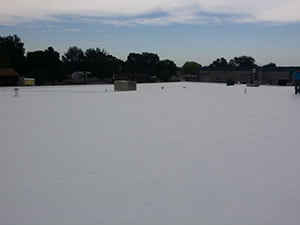
A commercial roof leak in Pasadena, CA does not automatically tell you how much of the roof needs repair. A ceiling stain may show that water entered the building, but the entry point can be somewhere else on the roof, and the amount of affected insulation or decking cannot be confirmed from the stain alone. Shark Commercial Roofing Systems provides commercial roof repair services throughout Southern California. Call 213-466-0074 to discuss a roof problem.
Deciding Between a Localized Repair and a Broader Assessment
The first step is to separate what can be observed from what a roof inspection still needs to confirm. A visible symptom can point the contractor toward a problem area, but the repair scope should be based on the condition of the roofing system and the extent of any moisture or deterioration found.
| What You Notice | What the Inspection Should Check | What It May Mean for the Scope |
|---|---|---|
| Interior water stain or active leak | Likely roof entry point, nearby seams or penetrations, and whether moisture extends beyond the visible interior location | A single repair may be enough, or further moisture investigation may be needed |
| Separated seam | Length of affected seam, condition of nearby seams, and surrounding membrane | A localized seam repair may fit if deterioration is isolated |
| Leak near a curb, vent, or pipe | Flashing, sealant, membrane transition, and nearby penetrations | One detail may need repair, or several related details may need attention |
| Damaged edge or flashing | Extent of cracking, separation, corrosion, or membrane damage around the detail | Spot work may be appropriate if adjacent materials remain serviceable |
| Ponding water | Drain and scupper condition, debris, insulation or slope conditions, and how broadly water collects | Cleaning or localized correction may help, or a broader drainage assessment may be required |
The table is decision support, not a diagnosis. A contractor should explain which conditions were directly observed, what remains uncertain, and whether additional investigation is needed before the final repair scope is approved.
When a Localized Repair May Be Enough
A targeted repair makes sense when the defect is limited and the surrounding roof remains serviceable. Examples can include one puncture, a short failed seam, isolated flashing damage, or a small area around a penetration where the problem can be clearly identified and repaired.
The contractor should still check the adjacent roofing before closing the job. A repair that addresses only the most visible opening can miss repeated seam deterioration, wet insulation, or a larger flashing problem that is not obvious from the first symptom.
When More of the Roof Needs Assessment
A broader assessment becomes more important when the same location leaks again after repair, similar defects appear in several roof areas, moisture is found beyond the immediate problem area, or the roof shows widespread deterioration. Ponding that appears across multiple sections can also signal a drainage or insulation issue that a simple patch will not correct.
Shark’s commercial roofing maintenance information provides additional context on drainage, flashing, penetrations, and recurring conditions that should be tracked over time.
What a Commercial Roof Repair Quote Should Include
A clear quote should identify the exact area being repaired, the work included at seams, penetrations, or flashing, the materials being used, and whether removal and disposal are part of the scope. It should also explain how additional damage found after opening the roof will be documented and approved.
Ask whether the quote includes temporary protection if the roof must remain open during part of the work, how affected rooftop equipment will be handled, and what repair-specific warranty or service terms apply. The written scope should distinguish coverage for the completed repair from the condition of surrounding roofing that was not part of the work.
Plan Access Around Building Operations
Commercial roof repair can affect parking, entrances, tenants, equipment service, or interior work areas. The contractor should plan roof access, material staging, debris removal, and work hours around the building’s normal operations where practical.
Property owners should not need to access the roof themselves to diagnose the problem. Access planning belongs in the contractor’s scope, along with the safety measures and coordination needed for the specific building.
Repair, Maintenance, or Replacement?
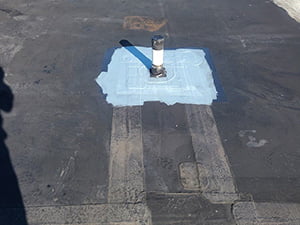
A repair can address a localized defect, while maintenance helps track and address smaller conditions before they develop into larger problems. When damage is too widespread for a practical repair scope, replacement may become the more appropriate discussion.
Shark’s commercial roof replacement information explains that broader path. The choice should follow the actual roof condition rather than the age of the roof or the location of one leak by itself.
Commercial Roof Repair in Pasadena, CA
The right repair scope starts with evidence. A building owner should know what was observed, what area will be repaired, what still needs confirmation, and what would cause the contractor to expand the scope. Shark Commercial Roofing Systems serves commercial properties in Pasadena and throughout Southern California. Call 213-466-0074 to request an evaluation.
Frequently Asked Questions
Does a ceiling stain show where the roof leak is?
Not necessarily. Water can travel through the roof assembly before it becomes visible inside, so the entry point should be confirmed through inspection.
When is a localized commercial roof repair appropriate?
A focused repair may fit when the defect is isolated and the surrounding membrane, insulation, flashing, and deck remain serviceable.
What should happen if more damage is found during the repair?
The contractor should document the additional condition, explain how it changes the scope, and get approval before performing work outside the agreed repair.
How often should a repaired commercial roof be inspected?
The schedule should reflect the roof system, condition, repair history, weather exposure, and any written maintenance or warranty requirements that apply to the actual roof.