

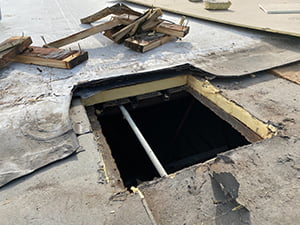
A brown ceiling stain, a musty smell or a drip after rain may signal unwanted moisture in a commercial building, though the source still needs to be confirmed. Shark Commercial Roofing Systems has worked in commercial roofing since 1983 and serves City of Industry, CA properties. The most useful early question is whether the problem is a single repairable defect or a sign that a larger part of the roof needs attention.
The answer depends on evidence, not on how a stain looks. A stain shows where water emerged inside, while the source can be some distance away. To discuss a specific building, call (213) 466-0074.
Older Roofs: Increased Cause for Concern
Water in a building is a problem for more than the ceiling. Moisture trapped between the roof and the interior can wet insulation and create the humid conditions mold needs. Once mold has taken hold, cleanup can involve opening ceilings and walls, and, when warranted, a mold removal assessment and remediation. Mold can also affect the people who use the building, so a leak is worth addressing early.
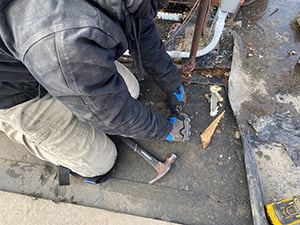
Older roofs are more likely to leak because seams, sealants and flashings wear over time. That does not automatically mean the whole roof must come off. After identifying and repairing the leak, a roof with a sound deck and dry insulation may qualify for a silicone or acrylic coating instead of full replacement. Whether that fits depends on how widespread the damage is, which is exactly what the assessment below is meant to establish.
Leak Detecting
Finding a leak means following water back to its source, not stopping at the stain. A thorough check works from the inside out: the space above the ceiling, whether an attic or a tight crawl space, is examined for damp insulation, staining on decking or framing, and any daylight showing through the roof. The inspection then moves to the roof surface to compare those findings with the seams, flashings and penetrations above them.
Infrared scanning can add to this picture. Shark’s scanning can include a licensed drone pilot covering the full roof surface, and the thermal images highlight areas that may hold moisture. Those areas are indicators. They should be confirmed with a direct check before they shape a repair scope. The table below shows how common symptoms connect to the evidence worth collecting.
| What you notice | What an inspection should look at | What the evidence can and cannot tell you |
|---|---|---|
| A ceiling stain or drip in one spot | Roof area above it and the path water could take to reach that point | Water often travels along decking or insulation before it shows, so the stain marks where water came out, not necessarily where it got in |
| Leaks that appear only after hard rain | Seams, laps and edge details where wind-driven water can enter | Intermittent leaks may relate to wind-driven entry at seams or details; the opening still needs confirmation |
| Leaks near vents, pipes or rooftop equipment | Penetrations, curbs and the flashing or sealant around them | A localized flashing defect may be repairable; several failed penetrations call for wider review |
| Damp insulation or a musty smell | Moisture extent across the roof, confirmed by infrared scanning and direct checks | Thermal patterns can suggest moisture; targeted direct checks determine what is actually wet and whether spot repair is suitable |
| Repeated repairs in the same area | Prior patch locations, membrane condition and the layers beneath | Recurring failures call for examination of surrounding materials and prior repairs before another patch |
Stains alone should not drive a diagnosis. Two roofs with identical ceiling marks can have very different problems, which is why the roof-level evidence matters.
When a Localized Repair Is Enough
A localized repair makes sense when the evidence points to a limited, identifiable defect: a failed flashing, an opened seam, a worn sealant at a penetration. The surrounding membrane should be sound, the insulation beneath it dry or limited to a small area, and the deck intact. Under those conditions, a targeted fix can restore the roof efficiently, and our commercial roof repair work is built around this kind of scoped correction.
A repair has limits, though. If moisture has spread across a wide area, if the same location has been patched repeatedly, or if the membrane no longer bonds to new material, a spot repair is likely to be short-lived. In those cases a broader assessment should come before any more money goes into patches.
What a Repair Quote Should Include
A quote should show what is being fixed, where, and with what. Owners can use this list to compare proposals:
| Quote item | Why it matters |
|---|---|
| Locations of each repair, marked or photographed | Lets an owner confirm the work matches the findings |
| Materials compatible with the existing roof | A patch that does not bond to the existing membrane tends to fail early |
| Scope for wet insulation or damaged decking | Replacing saturated material is a separate decision from sealing a seam |
| Access and scheduling plan | Rooftop equipment, tenant hours and safe crew access affect timing and cost |
| What is excluded | Hidden conditions found during work should have a stated process rather than a surprise |
Access planning deserves its own mention. Roof access should be left to qualified crews using suitable safety measures, and building occupants should not attempt to reach the roof themselves. Coordinating timing with tenants and operations keeps disruption low.
Next Steps for a City of Industry Roof
Leaks rarely fix themselves, and finding one early can limit damage. For a building in City of Industry, a documented inspection followed by a scoped quote gives an owner a clear basis for deciding between repair, coating and replacement. Scheduled roof maintenance helps catch worn details before they leak. If you are concerned about a possible leak, contact Shark Commercial Roofing Systems or call (213) 466-0074.
Frequently Asked Questions
Does a ceiling stain mean the roof leak is directly above it?
Not necessarily. Water can travel along decking, insulation or framing before it appears inside, so the source may be some distance from the stain.
When is a spot repair not enough?
If moisture is widespread, the same area keeps failing or the membrane will not bond to new material, a broader assessment should come first.
Can infrared scanning confirm a roof leak on its own?
It highlights areas that may hold moisture, but suspect spots should be confirmed with a direct check before repair decisions are made.
Can a leaking roof be coated instead of replaced?
Sometimes. A coating can suit a roof with a sound deck and dry insulation, and the assessment determines whether those conditions are met.