


An acrylic roof coating can be a practical restoration option for a commercial roof in Van Nuys, CA when the existing assembly is still serviceable and can be properly prepared. The decision should follow evidence about moisture, adhesion, substrate condition, drainage, compatibility, and repair needs rather than an assumption that every aging roof can be coated.
Shark Commercial Roofing provides acrylic coating and commercial roof restoration services in Van Nuys. The goal of the initial evaluation is to determine whether coating is appropriate for the existing roof or whether repair or replacement work needs to come first.
For additional context, see Shark’s guides to rubber roof coating in Van Nuys and commercial roof coating in Van Nuys.
Is Your Roof a Good Candidate for Acrylic Coating?
Acrylic coating is a surface restoration system. The existing roof still needs to provide a suitable base for the work. The table below shows the conditions that should be checked before a coating scope is approved.
| Factor | When coating may be appropriate | When repair or replacement needs attention first |
|---|---|---|
| Moisture | The roof assembly does not show unacceptable moisture conditions in areas that would remain covered. | Wet or deteriorated insulation, or other moisture concerns, require further investigation and corrective work. |
| Adhesion | The existing surface is secure and can receive the preparation required by the selected coating system. | Widespread lifting, delamination, failed repairs, or unstable materials prevent a reliable coating bond. |
| Substrate condition | The deck and underlying assembly remain suitable for restoration. | Rotten decking or broader deterioration needs repair or replacement rather than being covered. |
| Drainage | Drains, scuppers, slope, and discharge conditions are suitable for the roof. | Ponding caused by a drainage defect needs separate correction. Coating does not create proper drainage. |
| Compatibility | The existing roof surface and prior materials are compatible with the proposed acrylic system. | Incompatible existing materials or uncertain coating history require testing, preparation changes, or another roofing approach. |
Stated plainly, an acrylic coating does not repair rotten decking, replace saturated insulation, or correct ponding water caused by poor drainage. Shark’s drainage guidance explains why water movement needs to be addressed as its own roof condition.
Why Choose an Acrylic Roof Coating?
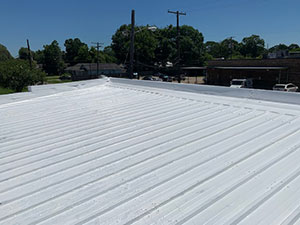
When the roof is a suitable restoration candidate, acrylic coating can provide a continuous protective surface over the prepared existing roof. Its usefulness depends on the condition underneath it and the quality of the preparation.
Weather protection. A properly applied acrylic system can help protect the existing roof surface from UV exposure and weathering. It should not be described as a substitute for repairing open seams, damaged flashing, active leaks, or deteriorated substrate before application.
Reflectivity. White acrylic coatings can reflect a portion of incoming solar energy and reduce heat absorbed at the roof surface. That may help reduce cooling demand in some buildings, but actual energy performance depends on insulation, HVAC efficiency, air leakage, occupancy, and the rest of the building envelope.
Restoration instead of immediate replacement. Coating can extend the serviceability of a roof that remains a sound restoration candidate. It should not be used simply to postpone replacement when inspection findings show that the underlying assembly needs broader corrective work.
The Coating Process
Preparation and repairs. The roof should be cleaned and prepared according to the selected coating system, with compatible repairs completed before coating begins. Loose material, failed seams, flashing defects, and other conditions that would interfere with adhesion need to be addressed first.
Application. The contractor should follow the selected system’s requirements for coverage, weather conditions, surface dryness, and recoat timing. Those requirements vary by product and project, so the proposal should identify the system being used rather than relying on a universal application rule.
Application acceptance. Before closeout, the completed work should be checked for continuous coverage, visible defects, incomplete areas, and other conditions identified in the project scope. Any required touch-up work should be completed before the project is accepted.
Follow-up inspection. A restored roof still needs future observation and maintenance. Shark’s commercial roof maintenance information provides context for inspections and ongoing care after restoration.
The Price of an Acrylic Roof Coating
Acrylic coating cost depends on roof area, existing condition, preparation and repair needs, access, coating specification, and application requirements. A roof needing substantial repairs will have a different scope from one requiring routine cleaning and preparation.
Cost comparisons should use equivalent scopes. A lower price is not meaningful if one proposal excludes repairs, drainage work, moisture investigation, or preparation that another includes. Compare the work being delivered, not just the total.
Complete Acrylic Roof Coating Solutions
Shark Commercial Roofing provides acrylic roofing systems from evaluation through preparation, application, and follow-up planning. Its current acrylic roofing information also emphasizes cleaning and repairing existing damage before coating application.
For a Van Nuys property, the coating decision should come down to fit: confirm that the roof is a restoration candidate, define the repairs and preparation required first, address drainage separately when needed, and make sure the proposed acrylic system is compatible with the existing roof.
Contact Shark Commercial Roofing at (213) 466-0074 to discuss an acrylic roof coating evaluation for a Van Nuys commercial building.
Frequently Asked Questions
Can any commercial roof be coated with acrylic?
No. The existing roof needs to be suitable for restoration. Moisture, substrate condition, adhesion, drainage, compatibility, and repair needs should be evaluated before coating is approved.
Will acrylic coating fix ponding water?
No. A coating does not correct the drainage condition that causes ponding. Drains, slope, scuppers, or other drainage details need to be evaluated separately.
Does an acrylic roof coating guarantee lower energy bills?
No. Reflectivity can reduce heat absorbed at the roof surface, but actual energy use also depends on insulation, HVAC performance, air leakage, occupancy, and building operations.
What should happen after an acrylic coating is installed?
The completed work should receive the agreed acceptance checks, and the roof should continue to receive periodic inspection and maintenance based on its condition and the installed system.