

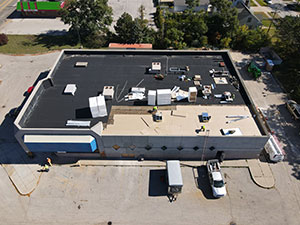
Commercial roof maintenance in City of Industry, CA should turn inspection findings into a written schedule of what needs attention now, what can wait for a planned visit, and what should simply be monitored. Shark Commercial Roofing Systems provides commercial roof maintenance and helps owners document roof conditions before approving maintenance, repair, restoration, coating, or replacement work.
A useful maintenance plan does not promise that a roof will never leak. It creates a repeatable way to inspect the roof, record findings, complete prioritized work, and return sooner when weather or recurring symptoms justify another review. To discuss a maintenance plan, call (213) 466-0074.
Explanation of Roof Maintenance Services
Routine roof maintenance starts with documented inspection findings. The contractor should review the roof surface, seams, flashing, penetrations, drainage, previous repairs, and other details that matter to the existing system. When moisture is suspected, additional investigation may be appropriate before repair or coating work is approved. Shark also uses infrared scanning and thermal drone inspections as assessment tools, but any thermal anomaly still needs to be interpreted in the context of the roof assembly and site conditions.
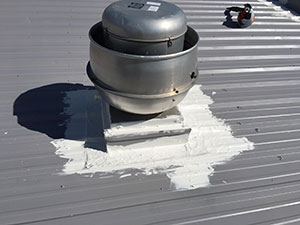
Preventive work can include clearing debris where it affects drainage, correcting localized sealant or flashing defects, addressing limited seam problems, and documenting conditions that need monitoring. If water is not leaving the roof as intended, the cause should be identified before repeated patching. Shark’s drainage page covers that separate issue in more detail.
A Seasonal and Post-Storm Maintenance Schedule
The timing should fit the roof, warranty documents if any, repair history, rooftop activity, and exposure. The matrix below is a planning framework, not a universal twice-a-year rule. Building staff should limit observations to safe locations. Roof access, testing, repairs, and close inspection belong to qualified personnel.
| Planning Window | Safe Owner Observations | Contractor Work | Follow-Up Trigger |
|---|---|---|---|
| Planned inspection | Interior stains or damp areas, exterior water marks, and visible changes noted from safe ground-level or interior locations | Inspect seams, flashing, penetrations, roof surface, drainage, and prior repairs; update dated photos and action list | New defects, recurring findings, or open work that has increased in severity |
| Before the rainy season | Bent or disconnected downspouts, visible debris near roof edges, or discharge that collects near the building | Check drains, scuppers, gutters, downspouts, seams, and flashing; complete approved drainage or detail repairs | Blocked drainage, incomplete prior work, or conditions likely to interfere with water flow |
| After significant weather | New leaks or stains, debris around the property, and standing water visible from a safe vantage point | Inspect affected drainage, seams, flashing, penetrations, and surface areas; photograph changes and compare with prior records | Active leakage, new damage, or water that remains after surrounding areas have drained |
| Ongoing record review | Dates and locations of recurring interior symptoms or operational concerns | Update completed actions, open items, photos, and the next recommended review point | Repeated findings in the same area or a condition that changes faster than expected |
Prioritize Findings and Track Completed Work
A simple priority system can keep the plan usable. Prompt items include active leaks, damaged flashing, open seams, or drainage conditions that could cause continuing water exposure. Planned items are defects that are stable enough to address during the next approved visit. Monitor items are conditions that do not currently justify repair but should be photographed and compared during later inspections.
Each record should identify the location, finding date, priority, recommended action, completion date, and any follow-up trigger. If the roof has a written manufacturer or installer warranty, review that document for inspection, maintenance, notification, or record-keeping requirements and retain evidence of completed work. The warranty itself, not a generic maintenance schedule, controls those obligations.
Visible Roof Maintenance Indications
Some visible conditions justify professional review before the next planned visit.
Separated seams. A seam opening can allow water entry, but the repair method depends on the roof system, surrounding material, contamination, and the extent of the defect. Localized damage may support a repair when the surrounding roof remains serviceable.
Lifted or displaced material. Movement can result from weather, aging, attachment conditions, or earlier installation details. The cause and repair scope should be confirmed on site rather than diagnosed from the ground.
Sagging or uneven areas. These can indicate several different conditions, including deck, support, insulation, or drainage issues. Surface appearance alone does not establish the cause.
Standing water or recurring drainage problems. Water that remains after surrounding areas have drained deserves investigation. Maintenance may include clearing an obstruction, but persistent ponding can require a broader drainage or roof-slope assessment.
What Maintenance Does Not Guarantee
Maintenance can reduce avoidable deterioration, document changes, and address defects before they expand, but it cannot guarantee that every future leak or failure will be prevented. Severe weather, concealed moisture, equipment work, aging materials, or damage between visits can create new conditions. That is why the schedule needs follow-up triggers instead of relying only on calendar dates.
Custom Roof Maintenance Services!
Shark Commercial Roofing Systems provides commercial roof maintenance for buildings in City of Industry, CA. A practical plan should connect inspection findings, priorities, completed actions, drainage observations, and the next review point. To discuss a maintenance schedule for your building, contact Shark Commercial Roofing Systems or call (213) 466-0074.
Frequently Asked Questions
How often should a commercial roof be maintained?
The interval depends on the roof system, condition, repair history, rooftop activity, weather exposure, and any written warranty requirements. Use those factors and inspection findings to set the next review date.
What can building staff safely check?
Staff can document interior stains, damp areas, visible discharge problems, and exterior changes from safe locations. Roof access, testing, cleaning, and repairs should be left to qualified personnel.
Does regular maintenance guarantee the roof will not leak?
No. Maintenance can reduce avoidable deterioration and catch problems earlier, but weather, concealed conditions, damage, and aging can still cause leaks between visits.
What should a roof maintenance record include?
Record the location, finding date, priority, photos, recommended action, completion date, and the condition or event that should trigger another review.