

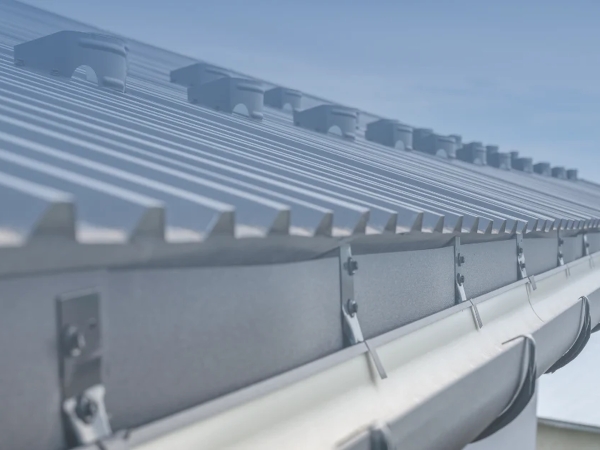
Commercial gutters in Carson, CA can overflow or back up for several different reasons, so heavy-rain overflow should not be treated as proof of one specific problem. Debris, restricted outlets, damaged downspouts, inadequate capacity, low areas on the roof, or a drainage layout that no longer matches the building can all contribute.
Shark Commercial Roofing Systems provides Commercial Gutters within its approved commercial roofing scope and serves Carson. For a building owner or facility manager, the useful next step is to determine where water is collecting, which drainage path is affected, and whether the problem belongs to the gutter, scupper, roof-drain, downspout, roof-slope, or discharge portion of the system.
Commercial Roof Drainage Uses Different Components
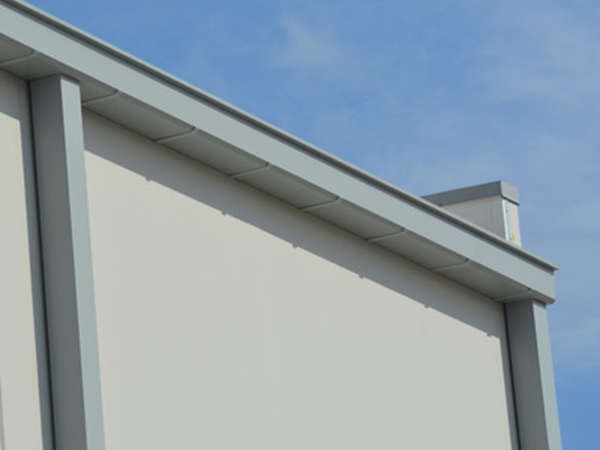
Commercial roofs may use perimeter gutters, scuppers through parapet walls, interior roof drains, or a combination of these approaches. Gutters collect water along a roof edge and direct it toward downspouts. Scuppers allow water to leave through an opening at a wall or edge. Interior drains collect water at designated low points and route it through piping within the building.
These components are related, but they are not interchangeable. The building’s original roof design, slope, drainage area, outlet locations, and discharge path all affect how water should move. Shark’s drainage solutions page also identifies gutters, scuppers, and roof drains as distinct parts of commercial roof drainage.
Common Reasons Gutters or Drains Overflow
The table below is a screening guide, not a diagnosis. Several conditions can produce similar symptoms during a storm.
| Condition | What You May Observe | What Needs to Be Checked |
|---|---|---|
| Debris or blockage | Water backs up near a drain, scupper, gutter outlet, or downspout, especially after wind or nearby debris accumulation. | Whether the opening, conductor, or downstream discharge path is restricted. |
| Capacity concern | The system appears clear but struggles during heavier rainfall. | Whether the drainage area, outlet size, number of outlets, and connected piping are appropriate for the actual roof and rainfall design criteria. |
| Low areas or poor flow toward outlets | Water remains away from drains or collects repeatedly in the same roof area. | Roof slope, settlement, drain elevation, crickets, and other conditions that influence water movement. |
| Damaged gutter or downspout | Water spills down a wall, leaks at joints, or discharges where it should not. | Connections, joints, supports, damaged sections, and the final discharge location. |
Heavy-Rain Overflow Does Not Automatically Mean the System Is Undersized
If overflow happens only during the heaviest rain, capacity is one possibility, but it is not the only one. A partially blocked outlet can pass smaller amounts of water and still back up during a stronger storm. Debris can shift during rainfall. A damaged downspout or restricted discharge line can also make an otherwise adequate gutter appear undersized.
A capacity conclusion should follow an assessment of the drainage area, outlet configuration, piping or downspout path, roof slope, and any applicable design requirements. Increasing gutter or drain size without identifying the actual restriction can leave the original problem unresolved.
Roof Coatings Do Not Correct Drainage Design
A roof coating can be part of a separate restoration scope when the existing roof is suitable, but coating the surface does not clear a blocked drain, reconnect a downspout, change an undersized outlet, or correct a structural low area by itself. Drainage concerns should be evaluated on their own terms before a coating or other surface treatment is expected to solve them.
The same distinction applies to localized roof repair. A damaged roofing area can be repaired, but a repair at the membrane surface does not automatically correct an underlying drainage-capacity or discharge problem.
What a Drainage Assessment Should Clarify
A useful assessment starts by identifying which components serve the affected roof area. The contractor should check visible gutters, scuppers, roof drains, outlets, downspouts, and accessible discharge points for blockage, separation, damage, or obvious restrictions. The roof should also be reviewed for low areas and patterns of standing water.
If cleaning or a localized repair does not explain the repeated overflow, the next step may involve evaluating capacity, slope, outlet placement, or another building condition. The proposed correction should state what is being changed and why, rather than simply recommending larger components without evidence.
Watch the Discharge Area Too
The roof is only one part of the drainage path. Water that reaches a downspout but discharges at an unsuitable location can still create problems around entrances, loading areas, walls, paving, or the building perimeter. Property managers should note where water ends up after it leaves the roof and whether the final discharge route is part of the roofing scope or another site-drainage scope.
Repeated water near a loading dock or entrance can affect operations and pedestrian or vehicle movement even when the roof itself is not leaking. That makes discharge routing a practical building-management issue as well as a roofing issue.
Maintenance Should Follow the Actual System
There is no single inspection interval that fits every commercial drainage system. The appropriate schedule depends on the roof design, nearby debris, prior blockages, storm exposure, rooftop work, building use, and any written maintenance requirements that apply.
Shark also provides commercial roof maintenance. The company’s current site materials identify drainage checks and clearing as part of commercial roof maintenance. A property with recurring blockage or heavy debris exposure may need more frequent attention than a building with a clean, stable drainage history.
Commercial Gutters in Carson, CA
For a Carson commercial property, repeated gutter or drainage overflow should be investigated before the next major storm exposes the same weakness again. The right correction depends on whether the problem is blockage, damage, capacity, slope, outlet placement, downspout routing, or another condition affecting water movement.
Shark Commercial Roofing Systems serves Carson and provides Commercial Gutters within its approved commercial roofing scope. Contact the team at the Shark contact page or (213) 466-0074 to discuss the affected roof and drainage conditions. The current site lists the same phone number for Shark Commercial Roofing Systems.
Frequently Asked Questions
Why do my commercial gutters overflow only during heavy rain?
Capacity may be one cause, but partial blockages, restricted downspouts, poor discharge, low areas, or other drainage conditions can produce the same symptom. The full drainage path should be checked before concluding the system is undersized.
Can a roof coating fix a drainage problem?
No. A coating does not clear a blockage, resize an outlet, reconnect a downspout, or correct a low area by itself. Drainage and coating scopes should be evaluated separately.
How often should commercial gutters and drains be checked?
The interval should reflect the roof design, debris exposure, prior blockages, storm history, rooftop work, and any written maintenance requirements rather than one fixed schedule for every building.
What should be checked when a downspout is overflowing or disconnected?
The gutter outlet, joints, downspout sections, supports, downstream restriction, and final discharge location should all be reviewed so the repair addresses the complete water path.