

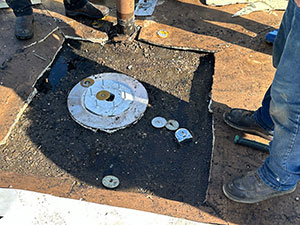
When a commercial flat roof leaks, the damage is not limited to the ceiling. Water can reach inventory, equipment and electrical systems, interrupt operations and create safety hazards. For a Burbank property manager, the first question is where water entered the roof and whether moisture or deterioration has spread beyond the visible symptom. Shark Commercial Roofing Systems is a family-owned commercial roofing company that has worked in the industry since 1983 and serves commercial properties in Burbank and the surrounding area.
This page explains how to trace a leak, check the nearby details, and establish the boundary of a compatible repair before authorizing work. For a leak at a Burbank building, call (213) 466-0074.
Flat Roof Susceptibility
Flat roofs are really low-slope roofs, and they depend on drains, scuppers and a continuous waterproof surface to move water off. That makes them susceptible to a few specific problems.
- Ponding water. Water that remains after rain can expose vulnerable details for longer periods and may signal blocked outlets or drainage problems.
- Seams and flashings. Open seams, lifted edges and deteriorated details at curbs, vents, pipes and rooftop equipment can create water-entry paths.
- Punctures and damage. Foot traffic, equipment service, dropped tools and debris can puncture or tear a membrane.
- Weathering. Sun, heat and temperature swings can contribute to material deterioration; the specific signs vary by roof assembly.
Early signs inside the building include small stains on ceilings and walls, bubbling or peeling paint, and drips after rain. A stain shows where water appeared, not necessarily where it entered. On a flat roof, water can travel along the deck, through insulation or down a wall before it shows up inside.
Preventing Flat Roof Leaks
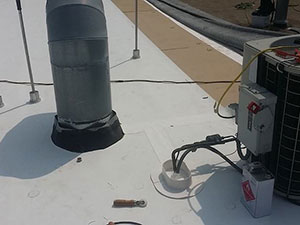
Managing recurring leak risks includes roof maintenance: checking drains, seams, flashings and earlier repairs, and addressing observed defects before further water entry. Building staff can document new stains and report changes from safe areas; qualified crews should handle roof access and checks after damaging weather. Maintenance cannot promise a roof will never leak, but it makes small problems easier to catch.
How a Leak Is Traced
A proper leak repair begins with finding the entry point rather than patching the stain. That usually means checking the interior symptom, then working up and back along the likely water path on the roof. An inspector considers nearby seams, flashings, penetrations, roof-to-wall transitions, drainage and earlier patches, then documents the plausible route and remaining uncertainties. Where appropriate, Shark can use full-surface drone infrared scanning with a licensed pilot to identify thermal anomalies for further evaluation. Imaging alone does not prove wet insulation or identify an entry point; findings may need appropriate direct confirmation. The commercial roof inspection guide describes what a thorough inspection covers.
Matching the Repair to the Roof
A patch must suit the identified roof system. Thermoplastic membranes such as TPO and PVC commonly use compatible heat-welded patches, while EPDM may require an approved adhesive or tape system. Modified-bitumen repairs use methods and materials suited to that assembly. Preparation can include removing debris, drying the surface, checking remaining material integrity and following the repair-system requirements. A generic sealant is not a substitute for a compatible, prepared repair. Shark’s roof systems page covers TPO, EPDM and PVC. Flashing at equipment may need component replacement or a system-specific detail repair; the scope follows the condition of the materials and the movement expected there.
When a Repair Is Not Enough
A repair addresses a defined problem. When the evidence points to something wider, the scope should change. The table shows the evidence that separates the two cases.
| Evidence | Points to a localized repair | Points to a wider problem |
|---|---|---|
| Entry point | One supported entry point, such as a puncture, open seam or failed flashing, consistent with the documented water path | Water tracing to several areas, or no single defect that explains the leak |
| Insulation and substrate | No evidence of widespread affected materials after suitable moisture investigation | Moisture or damage beyond the visible defect, including affected insulation or deteriorated deck |
| Membrane condition | Sound surface with good seams away from the damaged spot | Widespread cracking, blistering, shrinkage or seams opening in many places |
| Leak history | Isolated event with a supported cause and serviceable surrounding materials | Recurring leakage or earlier repairs that did not correct the source |
| Drainage | Water leaves the roof normally | Persistent ponding or deficient drainage requiring a separate evaluation |
| Roof age | Age and repair history are documented but do not override direct condition findings | Aging coupled with widespread deterioration or repeated unrepaired failures |
If the defect is contained and the surrounding materials remain serviceable, a defined repair may be appropriate. For a sound but aging roof, restoration with a compatible coating may be evaluated separately. Persistent ponding calls for a drainage review, not simply another patch. Widespread wet insulation or structural deterioration may require broader repairs or replacement, based on actual conditions.
Professional Flat Roof Leak Repair
A professional flat roof leak repair should address the supported entry point and the affected surrounding materials, not simply cover the location of an interior stain. When comparing contractors, ask for a written scope that names the work, the repair materials and how they are compatible with your existing roof, and any exclusions. Ask how the leak source was confirmed, and how wet insulation will be handled if it is found. Ask what documentation will be provided after the repair and how any additional damaged materials will be handled. Any warranty terms should come from the specific written repair documents, not an assumed blanket promise.
A short repair record helps afterward: dated photos of the problem area, the repair performed and any follow-up checks. If leakage recurs, those records make it easier to compare the earlier diagnosis with the new symptom without assuming the original repair has failed.
For a leak at a Burbank building, contact Shark Commercial Roofing Systems or call (213) 466-0074.
Frequently Asked Questions
Why does a flat roof leak where the stain is not?
Water can travel along the deck, through insulation or down walls before it shows inside, so the entry point is often some distance from the stain.
Can a flat roof leak be fixed with sealant alone?
Only where the roof-system requirements and observed defect support an approved sealant repair. A generic sealant cannot replace identification of the leak source, preparation and compatible materials.
How do I know whether a repair will be enough?
A documented entry point, suitable surrounding membrane and limited moisture concerns can support a defined repair. Recurring leaks or widespread affected materials call for wider investigation.
What should I do right after finding a leak?
Protect equipment and inventory, photograph the damage, note when it appears, and have the roof assessed before the next rain. Keep people off the roof.