

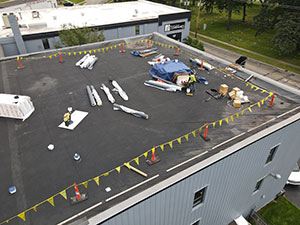
Commercial roof work covers more than one job. A building might need a leak traced and fixed, a regular inspection routine, a restoration coating or a new roof, and the right service depends on what the roof is actually doing. Shark Commercial Roofing Systems is a family-owned company that has worked in commercial roofing since 1983 and is headquartered in Van Nuys.
This page explains the main commercial roofing services, how to tell which one a building needs, and what a professional service process should include. For a specific property, call (213) 466-0074.
Comprehensive Commercial Roofing Service Options
A professional commercial roofing service usually starts by finding out what is wrong, not by selling a product. Inspection comes first, and the findings point to one of a few services.
| Service | What it covers | When it fits | What to ask |
|---|---|---|---|
| Repair | Locating the source of a leak or defect and fixing seams, flashings, punctures or failed sealant | Isolated damage where surrounding membrane and insulation remain suitable | How was the source confirmed, and what is the scope of the repair? |
| Maintenance | Scheduled inspections, drain and debris clearing, small repairs and a written record of findings | An existing roof where planned checks are appropriate to its system, condition and use | How often are visits made, and what is documented? |
| Acrylic and silicone coatings | A liquid-applied coating over a suitable existing roof | An existing sound, dry roof compatible with the specified system, after drainage concerns are evaluated | What preparation is required, and how is the roof confirmed dry and sound? |
| Replacement | Removing or covering the existing system and installing a new one | Extensive deterioration or wet materials where removal or larger work is warranted | What happens to the existing layers, insulation and flashings? |
| Drainage | Correcting how water leaves the roof, including drains and low spots | Ponding water or recurring leaks near drains | What is causing the water to stay, and how will the fix address it? |
Roof Installation and Replacement
Replacement makes sense when repairs no longer hold. Signs include wet insulation, repeated leaks in different areas, widespread membrane failure or a deteriorated deck. A replacement scope should state what is removed, what stays, how insulation, flashings and drains are handled, and how the building stays protected during the work. Shark’s roof systems page describes the systems it works with, including TPO, EPDM and PVC.
Roof Repair
Leaks, cracks, punctures, open seams and failed flashings are the usual reasons for roof repair. Quick action matters because water that gets under a membrane can travel before it shows up inside. A good repair starts with finding the real entry point, which is often some distance from the stain. Fixing the symptom without the source is how leaks come back.
Roof Maintenance
Maintenance keeps small problems small. It typically includes scheduled inspections, clearing drains and debris, minor repairs and a written record of what was found. Where appropriate, Shark can use infrared scanning from drones operated by licensed pilots to identify temperature patterns for further investigation. Thermal anomalies do not by themselves establish that insulation is wet; findings may require additional testing.
Restoration Coatings and Drainage
For roofs that are aging but still sound, acrylic and silicone coatings may extend serviceability when the roof is suitable, subject to the system and upkeep. Coating suitability depends on what is under the surface, so the roof has to be inspected first. Standing water is a separate issue. When ponding keeps returning, drainage solutions address how water leaves the roof rather than just what covers it.
From Observable Symptoms to the Next Service
An owner can report a ceiling stain, repeated wet areas after rain, blocked discharge visible from a safe location or a new leak near rooftop equipment. Those observations help locate the concern, but they do not identify the entry point or establish the condition beneath a membrane. Roof-level access and intrusive investigation belong with qualified personnel. A service proposal should describe which areas are being examined and which conditions remain uncertain.
- One confirmed seam or flashing defect: ask whether a compatible localized repair is sufficient and how the surrounding assembly was evaluated.
- Standing water that keeps returning: assess drains, scuppers and slope rather than assuming that another layer of coating will correct drainage.
- Repeated leaks in separate locations: document the frequency, existing repairs and suspected moisture extent before discussing a restoration or replacement scope.
- Uncertain moisture below the surface: distinguish screening results from verified wet insulation and define additional testing before agreeing to removal quantities.
These next steps are not a fixed sequence of services. For instance, a roof can need a drainage correction and a localized flashing repair without requiring a full replacement. A coating cannot restore deteriorated decking or make saturated insulation dry.
Benefits Commercial Roofing Services
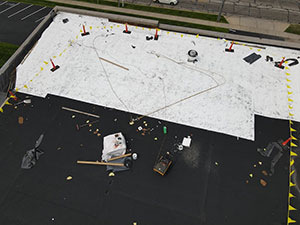
The value of professional service shows up in how problems are found and handled, not in promises about outcomes.
- Problems found earlier. Inspections can find worn sealants, loose flashings and drainage obstructions while they remain localized, although they cannot rule out concealed water damage.
- Documented condition. Written findings and photographs give an owner a record to plan repairs, budgets and any warranty conversations around.
- The right fix for the condition. An inspection separates a roof that needs a repair from one suited to a coating or one that needs replacement, which helps avoid replacing a roof too early or patching one that is past patching.
- Energy considerations. Different commercial roofing systems handle heat differently, and reflective surfaces such as light-colored membranes and some coatings reduce the heat a roof absorbs. Results vary by building, so ask what applies to yours.
- Protection from weather. Compatible seams, sound flashing and functioning drainage all contribute to water resistance. Maintaining those details is a large part of what a roofing service does.
Maintenance cannot prevent every leak. Its findings are most useful when assigned an appropriate repair or monitoring action rather than filed without follow-up.
Professional Service You Can Trust
Choosing a commercial roofing company is easier when you know what to look for. Ask for a written scope that identifies the observed condition, the proposed work, the materials or system, and anything excluded. Ask how the roof will be investigated before work is quoted, how concealed wet materials will be handled if discovered, and how the property will be protected while work is underway. Request details on warranties in writing, and keep in mind that workmanship and manufacturer warranties are separate and terms vary.
Shark Commercial Roofing Systems works on commercial properties in the Los Angeles area, from Van Nuys to surrounding communities. To discuss a building, contact Shark Commercial Roofing Systems or call (213) 466-0074.
FAQ
What does a commercial roofing service include?
Typically inspection, repair, maintenance, restoration coatings and replacement. The right service depends on the roof’s condition.
How do I know whether I need a repair or a replacement?
Localized defects on an otherwise serviceable roof may be repaired. Widespread wet materials or deterioration can require broader work, and the inspection should document the extent before a scope is chosen.
How often should a commercial roof be inspected?
An inspection interval depends on the roofing system, condition, rooftop activity and any written warranty requirements. Significant storms or new leaks can justify an additional review.
What should I ask a roofing contractor before hiring?
Ask for a written scope, how the roof will be investigated, what is excluded, how the property will be protected, and what warranties apply and who stands behind them.