

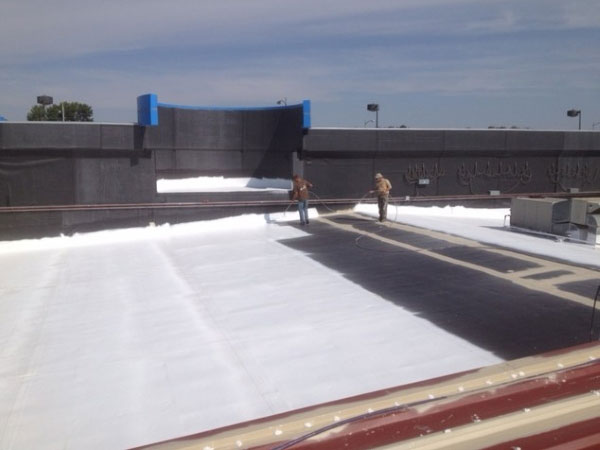
Commercial roof coating can be a practical restoration option for some buildings in El Segundo, CA, but it should follow a condition-based assessment. The existing roof needs to provide a suitable base, and moisture, drainage, adhesion, surface condition, repairs, and product compatibility all affect whether coating makes sense.
Shark Commercial Roofing Systems provides commercial coating and restoration services in Southern California. Property managers can call (213) 466-0074 to discuss whether an existing roof should be evaluated for coating.
What a Roof Coating Can Do
A roof coating is a liquid-applied restoration layer installed over a compatible existing roof surface after inspection, preparation, and required repairs. Depending on the selected system, it can renew the roof surface, improve reflectivity, and add protection without removing the entire roof assembly.
Coating should not be used to hide unstable materials, deteriorated decking, widespread trapped moisture, or other conditions that need repair or replacement first.
Moisture Conditions Matter Before Coating
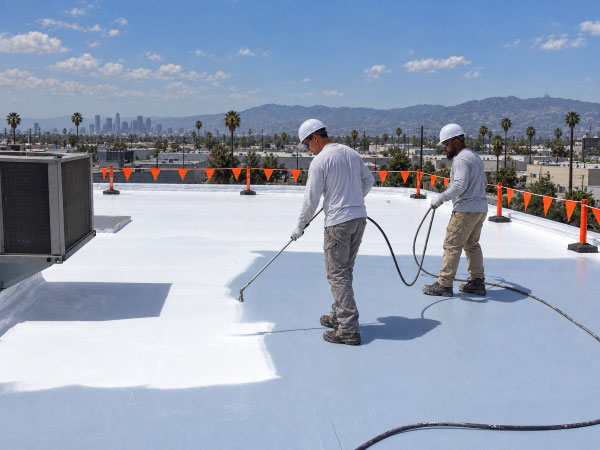
A roof can look dry at the surface while moisture remains elsewhere in the assembly. The appropriate investigation depends on the roof system, building conditions, and areas of concern.
Shark uses full-surface infrared scanning with drone technology as part of its inspection capabilities. Infrared images show temperature differences that can help identify areas that deserve closer investigation, but those patterns should not be treated as stand-alone proof of wet insulation or hidden damage.
The Existing Roof Must Be Stable Enough to Restore
Coating depends on a sound, compatible surface. Rotted decking, unstable insulation, extensive membrane failure, or widespread deterioration should be corrected before restoration moves forward.
The contractor should explain what repairs are required before coating, including work at seams, flashing, penetrations, edges, fasteners, or damaged membrane areas.
Drainage Problems Need Their Own Solution
Coating does not create slope or automatically correct recurring ponding water. If water repeatedly collects on the roof, the cause may involve drains, scuppers, low areas, settlement, blocked outlets, or roof geometry.
The proposal should state whether drainage corrections are included. If ponding is expected to remain, the contractor should explain how that condition affects coating suitability and the selected product requirements.
Acrylic and Silicone Coatings Have Different Uses
Acrylic and silicone coatings have different application, weathering, maintenance, and surface-compatibility characteristics. Neither should be presented as universally better for every commercial roof.
Shark’s silicone roof coating article provides related information about silicone systems for flat roofs. The final choice should still follow the actual roof condition, drainage, exposure, and manufacturer requirements for the proposed system.
Surface Preparation Affects Adhesion
Existing membranes, previous coatings, oxidation, dirt, oils, sealants, and other contaminants can affect adhesion. Cleaning, primers, adhesion testing, or other preparation may be required depending on the existing surface and coating selected.
A useful scope should identify the coating chemistry, preparation steps, primers when required, repairs, and any compatibility or adhesion checks used to support the proposed system.
Application Thickness Should Be Defined
A coating scope should state the target application rate or dry-film thickness required for the selected system. Listing only a number of coats is not enough if the finished thickness is not defined.
Thickness should also be considered with surface preparation, reinforcement, repairs, cure conditions, and product requirements. A thicker application is not automatically better if the rest of the system is not installed correctly.
Compare Coating With Repair and Replacement
A localized repair may be more appropriate when the roof has one defined defect and the surrounding system remains sound. Coating may fit when the roof is broadly serviceable but needs surface restoration and protection. Replacement deserves consideration when damage, moisture, or deterioration is too extensive for a restoration scope.
Shark’s commercial roofing article for City of Industry also discusses coatings as one option among other commercial roofing approaches, which is the same kind of comparison an El Segundo owner should make before choosing a scope.
Reflectivity Does Not Guarantee Energy Savings
Light-colored coatings can reduce roof-surface heat gain compared with darker surfaces, but that does not guarantee a specific reduction in utility costs. Insulation, HVAC performance, air leakage, building use, roof area, and climate also affect energy performance.
Reflectivity should be treated as one performance characteristic, not as a stand-alone financial promise.
What a Complete Coating Scope Should Include
A written scope should identify the roof areas involved, coating type and chemistry, preparation, cleaning, primers when required, repairs, reinforcement, application rate or target thickness, flashing details, drainage work, access, cleanup, exclusions, and how unexpected conditions will be handled.
If warranties are included, the proposal should distinguish manufacturer product or system coverage from the contractor’s workmanship responsibility. The actual warranty documents should control the terms.
Roof Coating in El Segundo, CA
For an El Segundo commercial property, the coating decision should come down to evidence: whether the roof is dry enough to restore, whether the substrate is stable, whether the surface can support adhesion, whether drainage works as intended, and whether defects can be repaired before application.
Shark Commercial Roofing Systems has served Southern California commercial property owners since 1983. Call (213) 466-0074 to discuss whether roof coating should be evaluated for your building.
Frequently Asked Questions
Can any commercial roof be coated?
No. A suitable candidate generally needs a stable, compatible roof surface, manageable moisture conditions, repairable defects, and drainage conditions that do not rely on coating to correct an underlying problem.
Can roof coating fix standing water?
No. Coating does not create slope or correct the cause of chronic ponding, so drainage conditions should be evaluated separately.
How does infrared scanning help with coating decisions?
Infrared scanning can highlight temperature patterns that deserve closer investigation, but it should be interpreted with visual inspection and other roof-condition evidence.
Does coating always extend roof service life?
No fixed extension applies to every roof. Performance depends on the existing assembly, preparation, product, installation, drainage, exposure, maintenance, and later repairs.