

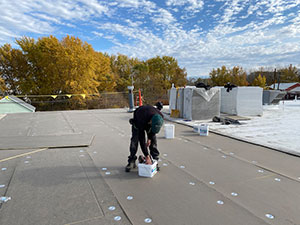
When two commercial roofing proposals for the same Burbank building show different totals, the price alone does not explain which scope is more complete. One contractor may be pricing a defined repair or restoration area with documented findings, while another may be using broader assumptions or leaving more work outside the base price. Comparing roof services fairly means putting each written scope against the same set of questions before choosing a contractor.
Shark Commercial Roofing Systems has served commercial properties for four decades and provides commercial roofing services in Burbank, CA. Call (213) 466-0074 to discuss a roof condition and the scope being considered.
Be Proactive
Comparing contractors is easier before a roof problem becomes an emergency. An active leak can force faster decisions, while planned evaluation gives an owner more time to understand what is failing, what service is being proposed, and what remains uncertain.
A useful roof assessment can document surface conditions, seams, flashing, penetrations, drainage, prior repairs, and other visible evidence. Additional investigation may be appropriate when concealed moisture or other hidden conditions could change the project, but no single inspection method, scan, or moisture test is required for every job.
Shark Commercial Roofing Systems uses inspection and documentation to help building owners make decisions before approving repair, maintenance, restoration, coating, or broader work. Its commercial roofing guide for Burbank covers the separate question of evaluating the roof condition before choosing a service.
Hire Experts
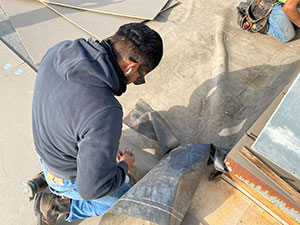
Contractor experience is most useful when it produces a scope an owner can understand. The proposal should identify what service is being recommended, the roof area involved, the evidence behind that recommendation, the materials or system details that matter to the work, and the conditions that could change the scope.
Shark’s confirmed commercial scope includes general commercial roofing along with acrylic and silicone coating and restoration work. The written proposal should still identify the actual system or repair method selected for the building rather than relying on a broad description such as “commercial roofing service.”
If part of a project will be handled by another trade or subcontractor, ask who is responsible for that work, coordination, access, and closeout. The important point is not whether every contractor uses the same staffing model. It is whether the proposal makes responsibility clear.
Side-by-Side Bid Review
Use the same checklist for every proposal. If one bid does not address an item, treat it as an open question rather than assuming it is included.
| Review Item | What to Confirm in Each Bid | Question to Ask |
|---|---|---|
| Service and roof area | Whether the scope is repair, maintenance, coating, restoration, replacement, or another service, and which areas are included | Are all contractors pricing the same roof area and the same type of work? |
| Investigation basis | Observed conditions, documented findings, and any uncertainty that could change the project | What evidence supports the recommendation, and what remains concealed or unknown? |
| Material or system specification | The coating, repair method, assembly, preparation, flashing, drainage, or other details needed to define the proposed work | Are all bids describing the same system and comparable preparation? |
| Exclusions and allowances | What is excluded and how concealed wet materials, deck damage, drainage corrections, or other added work will be handled | How will added work be documented, approved, and priced if new conditions are found? |
| Scheduling | Expected start window, sequencing, duration assumptions, and weather-delay handling | Which assumptions could change the schedule? |
| Occupied-property protection | Access, staging, noise, odors, debris, equipment protection, interior protection where needed, and coordination with building operations | How will tenants, customers, equipment, inventory, and access be handled while work is underway? |
| References | Whether comparable commercial project references are available | Can I ask a recent commercial owner about communication, scope changes, and completed work? |
| Warranty responsibility | Who provides any workmanship coverage, who provides any material or system coverage, and what written conditions apply | What is covered, excluded, required for maintenance, and used to make a claim? |
Questions That Reveal Incomparable Bids
Price differences become easier to understand once the scopes are compared line by line. Ask each contractor the same questions:
- Does each proposal cover the same roof area and service?
- What findings support the recommended work?
- What remains concealed or uncertain?
- Are preparation, flashing, drainage, and repair assumptions comparable?
- What work is specifically excluded?
- How are additional conditions documented and priced?
- Who is responsible for access, staging, protection, cleanup, and any subcontracted work?
- What written workmanship, material, or system terms actually apply?
A lower bid can reflect a narrower scope or more exclusions. A higher bid does not automatically establish better quality. The useful comparison is what each contractor has committed to do, what remains outside the scope, and how changes will be handled.
Understanding Warranty Responsibilities
The word “warranty” is not enough by itself. Workmanship coverage, when offered, comes from the contractor under its written terms. Material or system coverage may come from another provider and can have separate eligibility, maintenance, exclusion, and claims requirements.
Ask for the documents that actually apply to the proposed project. Do not assume a particular warranty length, coverage level, or repair obligation unless it appears in writing. Regular commercial roof maintenance can support ongoing roof care, while documented roof repairs can help owners keep a clearer service history. Those records do not by themselves guarantee warranty eligibility or claim approval.
Quality Roof Services
A strong commercial roofing proposal should connect the recommended work to the roof condition and explain enough detail for the owner to compare it with other bids. That includes the service, investigation basis, scope, exclusions, scheduling assumptions, protection plan, and written responsibility for any warranty coverage.
For occupied buildings, ask how roof access, deliveries, staging, debris, noise, odors, and interior-sensitive areas will be coordinated. These are planning items to define in the proposal. They should not be treated as a promise that business operations will continue without any interruption.
Shark Commercial Roofing Systems serves commercial properties in Burbank and has been in business since 1983. To discuss a commercial roof project, contact Shark Commercial Roofing Systems or call (213) 466-0074.
Frequently Asked Questions
Why do commercial roofing bids differ so much?
They may cover different roof areas, services, preparation, exclusions, scheduling assumptions, or concealed-condition risks. Compare the written scopes before comparing the final totals.
What should a written commercial roofing scope include?
It should identify the service and roof area, the evidence behind the recommendation, relevant system or repair details, exclusions, schedule assumptions, property-protection planning, and written warranty responsibilities.
What is the difference between workmanship and material warranty coverage?
Workmanship coverage, when offered, comes from the contractor under its written terms. Material or system coverage may come from another provider and follows its own conditions, exclusions, maintenance requirements, and claim process.
Should I always choose the lowest commercial roofing bid?
No. Compare the scopes first. A lower total may reflect less included work or more exclusions, while a higher total does not automatically prove better quality.