

Shark Commercial Roofing Systems is headquartered in Van Nuys and has worked in commercial roofing since 1983. Choosing a roof system for a commercial building comes down to a few practical questions: what the roof sits on, how it drains, what condition the insulation is in, and how much maintenance the owner is prepared to schedule. This page walks through those questions for flat and low-slope roofs, TPO, EPDM, and coating systems.
The short answer is that no single system is best for every Van Nuys property. The right choice depends on what an assessment finds, and a recommendation is only useful when it is tied to documented conditions. To discuss a specific building, call (213) 466-0074.
Commercial Roof Systems Compared for Van Nuys Buildings
Van Nuys roofs deal with strong sun and heat for much of the year, a rainy season that arrives in concentrated bursts, and the foot traffic that comes with rooftop equipment. The table below summarizes common options and the limits owners should confirm before committing to one. It is a starting point for the conversation with a contractor, not a substitute for an on-roof assessment.
| Roof system | Where it typically fits | What to confirm before choosing it |
|---|---|---|
| Existing built-up or modified bitumen roofs | Existing low-slope roofs with layered or bitumen-based membranes, when condition supports repair or restoration | Whether wet insulation or deck damage sits beneath the surface, and how many prior repairs and layers are already in place |
| TPO single-ply | Low-slope roofs where a light-colored, reflective membrane with heat-welded seams suits the building | Seam condition, flashing details at curbs and penetrations, and how much rooftop foot traffic the membrane will see |
| EPDM single-ply | Low-slope roofs that need a rubber membrane, often with adhered or taped seams | Seam and flashing condition, attachment method, and whether the building can accommodate a darker surface |
| Acrylic or silicone coating over an existing roof | Roofs with a sound substrate that need a protective surface without a full tear-off when compatibility and condition allow | Dry insulation (confirmed, not assumed), drainage, and how long water stays on the surface after rain, since acrylic and silicone behave differently where water ponds |
Two points are worth noting. First, a coating is a restoration option, not a replacement for a roof that has failed underneath. Second, a membrane choice that looks ideal on paper can disappoint if drainage, flashings or insulation are not addressed at the same time.
The Role of Insulation Performance
Insulation affects energy efficiency, temperature regulation and comfort inside a commercial building. Proper insulation reduces heat transfer, which keeps indoor temperatures steadier and lowers the load on heating and cooling equipment. Rigid board, spray foam and reflective products each have their place, and the right one depends on the roof assembly and the building.
Insulation also affects roof assembly performance. A suitable thermal and moisture-control design can reduce condensation risks that may contribute to mold and structural damage. The reverse is also true: insulation that has become wet loses much of its value. Concealed water in the assembly can remain undetected, which is why the condition of the insulation matters as much as the membrane on top of it.
That is where scanning helps. Full-surface infrared scanning may use drone-based thermal imaging operated by a licensed pilot, and it highlights temperature differences that may point to wet insulation. Thermal imaging can suggest possible moisture patterns rather than proving wet insulation, so suspect areas should be confirmed with a direct check before they shape a repair or replacement scope. California’s energy code can also set insulation and reflectance requirements when a commercial roof is replaced, so owners should ask their contractor how current requirements apply to the building.
Key Factors to Consider When Choosing Roof Systems
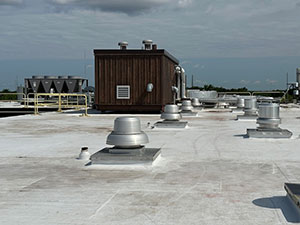
- Building type and use: Offices, warehouses and retail spaces place different demands on a roof, from rooftop equipment to foot traffic and interior temperature needs.
- Drainage and slope: Water that lingers after rain stresses seams and coatings. Understanding how gutters, scuppers and roof drains move water off the roof is part of choosing a system, not an afterthought.
- Existing condition: A sound roof deck and dry insulation open up restoration options. Saturated insulation or damaged decking usually narrows them.
- Energy performance: Reflective surfaces and the insulation layer both influence cooling demand, so evaluate them together.
- Ongoing care: Systems differ in how much attention they need, and a written plan for scheduled inspections and maintenance keeps small issues from growing.
- Lifecycle budget: Weigh installation cost against long-term maintenance and expected service life, not installation price alone.
- Appearance: Membrane color and finish can matter to owners who want the roof to suit the building.
Working through these factors in order, with an assessment behind each one, usually narrows the field quickly. Our guide to choosing between repair, coating and replacement follows the same logic for a different part of the Los Angeles area.
How a Contractor Should Assess a Roof Before Recommending a System
A useful recommendation starts with evidence. Owners can expect the following from an assessment, and can ask for it in writing:
| Assessment step | What it should produce |
|---|---|
| Surface and drainage review | Notes on seams, flashings, drains, ponding areas and visible wear, tied to specific locations on the roof |
| Infrared scanning where used | Thermal images showing temperature differences that may indicate wet insulation |
| Direct confirmation of suspect areas | Moisture readings or small test cuts that confirm or rule out what the thermal image suggested |
| Written recommendation | A scope that names the findings it responds to, so repair, coating and replacement options can be compared on the same evidence |
The last row is the one owners most often miss. When a proposal does not say which finding each line of work responds to, there is no way to compare it against another bid.
Matching the Findings to the Next Step
Once the assessment is in hand, the decision is usually straightforward. Localized damage on a roof with dry insulation and a sound deck often points toward repair. A roof that is generally sound but worn on the surface may suit an acrylic coating system, provided drainage and ponding have been addressed. Widespread saturation, repeated failures in the same areas or a deck that no longer holds fasteners points toward commercial roof replacement, where the insulation and drainage can be redesigned along with the membrane.
Shifting conditions can also change the answer over time. A roof that qualified for a coating two years ago may need a different approach after storm damage or new rooftop equipment, which is why dated inspection records are valuable.
Your Trusted Roof Systems Partner
Shark Commercial Roofing Systems serves commercial properties in Van Nuys and across the Los Angeles area, with flat roofs, TPO, EPDM and coating systems among the options we evaluate. We recommend based on what an inspection documents, and we aim to give owners the information they need before approving any work. To start with an assessment of your building, contact us or call (213) 466-0074.
Frequently Asked Questions
What is the best commercial roof system for a Van Nuys building?
It depends on the building. Roof condition, drainage, insulation and rooftop use all affect the choice, so an assessment should come before a material recommendation.
Can wet insulation be found without removing the roof?
Infrared scanning can flag temperature differences that suggest wet insulation. Suspect areas should then be confirmed with a direct check, such as a moisture reading, before work is scoped.
When does a coating make more sense than replacement?
A coating can suit a roof with a sound deck, dry insulation and workable drainage. If insulation is saturated or failures keep recurring, replacement is usually the better fit.
How often should a commercial roof system be inspected?
Most commercial roofs benefit from scheduled inspections, commonly twice a year, plus a check after severe weather. Dated reports help owners track changes over time.