

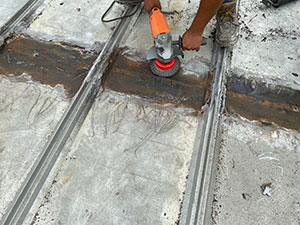
A commercial roof leak can damage equipment and inventory, interrupt operations and cost revenue, and the damage often spreads before anyone sees it. Shark Commercial Roofing Systems performs commercial roof leak repair for Burbank, CA, properties, and the practical questions for an owner are what to do first, how to tell a repairable defect from a larger problem, and what a repair proposal should cover.
Water rarely stays where it enters. It can travel along the deck and through insulation before it reaches a ceiling, so the place where it shows up inside is not always the place to repair. This guide covers acting quickly and safely, what leak evidence points to, the limits of a localized repair, and the maintenance that helps prevent the next leak.
Timeliness Matters
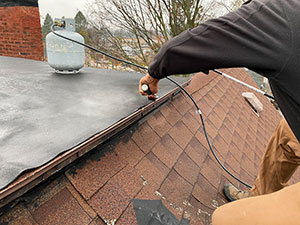
Leaks should not wait for the next convenient moment. Prolonged moisture can soak insulation, stain and weaken ceilings and walls, and encourage mold growth, so a quick response limits both damage and downtime. The response should be careful as well as fast.
Owners and site managers can help without going onto the roof. Keep people clear of wet ceilings and electrical equipment, have qualified staff address electrical hazards, move movable inventory away from the affected area, use safe interior containment where appropriate, photograph the damage and note when the leak appears, such as during heavy rain or only with wind. Do not walk the roof to hunt for the source. Roof surfaces can be slippery and fragile, and a professional can reach and assess the roof safely. A record of when and where the water appeared is a real help to the roofer.
Once the roof has been assessed, repairs should address the cause of the leak and not only the symptom. Shark’s commercial roof repair services begin with an evaluation of the roof, and the same approach applies in Burbank. The page on flat roof repair in Burbank explains how to tell a localized defect from damage that needs a wider look.
What the Leak Is Telling You
A stain or drip shows where water appeared, not necessarily where it got in. The table below shows common places where leaks show up, the inspection evidence that helps find the source, and how that evidence affects the choice between a localized repair and a broader assessment.
| Where water shows up | Evidence inspection should look for | A localized repair may fit when | A broader assessment is needed when |
|---|---|---|---|
| Along a wall, parapet or roof edge | Cracked, loose or separated flashing, failed sealant and the condition of the wall or edge behind it | The failure is limited to one run of flashing and the surface behind it is sound | Flashing has failed along long runs or the edge or wall behind it is deteriorating |
| Near a vent, pipe, skylight or rooftop unit | Failed sealant, damaged boots or curbs and a gap or crack at the penetration | A limited number of penetrations show a clear, correctable defect and adjacent materials are sound | Many penetrations are failing together or the membrane around them is damaged |
| Along a seam or at a membrane defect | Open or separating seams, punctures and blisters, and the condition of the membrane on both sides | The defect is short and the surrounding membrane is sound | Seams are failing in many places or the membrane is brittle, shrinking or worn through |
| Below a low area or drain | Where water stands, how long it stays after rain and whether drains, gutters and downspouts are clear | A blocked drain or localized drainage defect contributes to the problem and can be corrected | Ponding is persistent across a wide area, which points to slope, structure or drainage design |
| In several spots, or in new places after each rain | Moisture screening of the roof system and a direct check of flagged areas, since leaks can travel before they appear inside | Moisture is limited to a small area with a clear source | Moisture is widespread or the source cannot be traced to a single defect |
A stain alone is not enough to say how much of the roof is damaged. Moisture screening helps locate areas that may be wet. Shark’s evaluations can include full-surface infrared scanning by a licensed drone pilot, depending on the property and the question being answered. A thermal finding is an indicator and still needs a direct check before anyone concludes that insulation is saturated or that a section must be replaced.
Limits of a Localized Repair
A spot repair works when the leak has a clear, limited cause and the roof around it is sound. It is a poor fit when the same area keeps leaking, when new leaks appear nearby after every rain, or when wet insulation is found under the repaired spot. In those cases, the repair may be treating one symptom of a wider condition.
That is why a leak repair is best paired with an evaluation of the surrounding roof. If the evidence points to widespread wear, the conversation should move to maintenance, restoration or replacement, and the repair history should be part of that discussion.
What a Leak Repair Quote Should Include
When you compare proposals, look at what each one covers. A useful quote names the area to be repaired, the defect found there, the materials and method, how the repair ties into the surrounding roof and what is excluded. It should also say how related findings will be handled, such as wet insulation under the repaired area, and how the finished repair will be checked.
Ask about access planning as well. Before work begins, agree on roof access, where materials will be staged, how tenants and the public will be kept clear and how interior areas and equipment will be protected while the work is under way.
Regular Maintenance
Many leaks start as small problems that routine care would have caught. Scheduled maintenance programs for commercial roofs help identify issues such as damaged flashing, open seams or loose joints before they leak. Some owners schedule spring and fall inspections and additional checks after major storms. Appropriate frequency depends on the roof system, its condition and applicable maintenance requirements.
Regular cleaning matters too. Debris that collects on the roof can block downspouts and gutters, leading to standing water and leaks. Shark’s drainage solutions page covers what to do when water keeps standing even after the roof is cleaned. An inspection report with dated photographs and located defects, like the one described on the commercial roof inspection page, makes it easier to track conditions from one visit to the next.
Roof Leak Specialists
Commercial roof leaks commonly come from blocked gutters and downspouts, damaged skylights and chimneys, and failed flashing around vent pipes, rooftop units and other penetrations. Heavy rain, wind and other severe weather add stress to commercial roofs, which makes weak details show up as leaks.
Shark Commercial Roofing Systems has been in business since 1983. Its company background describes its focus on building care, roof repair and maintenance. If you have found a leak in your Burbank commercial building, call (213) 466-0074 or contact us to arrange an evaluation.
Frequently Asked Questions
What should I do first when a commercial roof leaks?
Protect equipment and inventory inside, contain the water, photograph the damage and note when it appears, then arrange a professional assessment. Do not go on the roof to look for the source.
Can a stain tell me where the leak is?
Not reliably. Water can travel along the deck and through insulation before it shows inside, so inspection evidence on the roof is needed to find the source.
When is a localized repair enough?
When the leak has a clear, limited cause such as one failed flashing run or penetration and the surrounding roof is sound. Repeated leaks or widespread moisture call for a broader assessment.
What should a leak repair quote list?
The area and defect, the materials and method, what is excluded, how related findings will be handled, access planning and how the finished repair will be checked.