

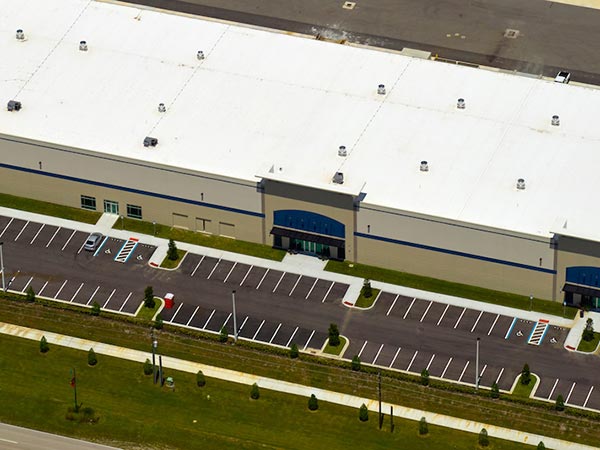
Commercial roofs in Glendale, CA face year-round exposure to heat, sunlight, rain, rooftop equipment, and regular maintenance traffic. For building owners and property managers, a thorough inspection provides a clearer picture of current roof condition and helps identify problems before they become expensive disruptions. Commercial roof inspections give property owners the information needed to prioritize repairs, plan maintenance, and make better long-term roofing decisions.
Call Shark Commercial Roofing Systems at (213) 466-0074 for commercial roof inspections in Glendale, CA.
Preparing for Commercial Roof Inspections
Before an inspection begins, building owners should ask what areas will be evaluated and what inspection methods will be used. A useful inspection should go beyond obvious surface damage and consider the membrane or roof covering, seams, flashing, penetrations, drains, edges, rooftop equipment areas, and other details where problems commonly develop.
It is also worth asking whether the inspection will include areas that are difficult to evaluate visually. Infrared scanning can help identify temperature differences associated with trapped moisture beneath certain roofing assemblies. When combined with drone imaging, infrared technology can provide coverage across large roof areas while reducing the need for inspectors to physically walk every section.
Property managers should also clarify what they will receive afterward. Knowing in advance whether the contractor provides photographs, condition notes, moisture findings, and repair recommendations makes the resulting report more useful for budgeting and planning.
What Commercial Roof Inspections Should Cover
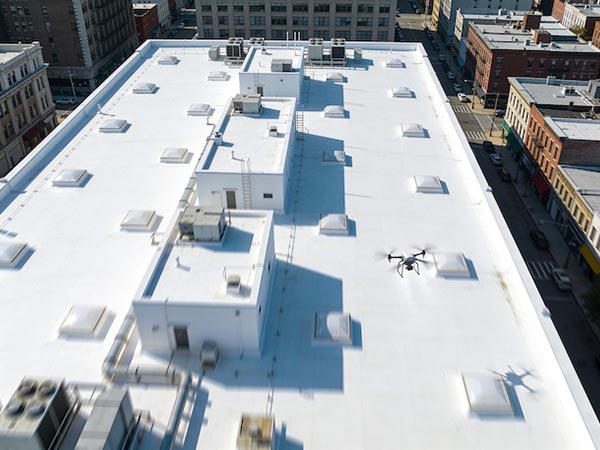
A thorough inspection should examine the full roof surface rather than focusing only on locations where leaks have already appeared. The inspector should look for membrane deterioration, open seams, punctures, surface wear, ponding water, damaged flashing, deteriorated sealants, and conditions around penetrations.
Drainage deserves particular attention. Blocked or poorly functioning drains can leave water standing on a low-slope roof, increasing stress on the roofing system and creating conditions that accelerate deterioration. Flashing around HVAC units, vents, pipes, skylights, and roof edges should also be evaluated because these transitions can become vulnerable as materials age.
Infrared drone scanning adds another layer to the inspection process. A standard visual inspection may identify visible deterioration, but moisture trapped below the surface can remain hidden. Infrared imaging can help locate areas that warrant closer investigation, allowing property owners to address concealed problems before they become visible leaks.
Using the Inspection Report to Prioritize Repairs
The value of an inspection depends heavily on what happens after the roof has been evaluated. A useful report should distinguish between conditions that require immediate attention and issues that can be monitored during routine maintenance. This helps property managers avoid treating every finding as equally urgent.
Photographs and clear descriptions make the report easier to understand and share with ownership teams. If moisture, membrane deterioration, or structural concerns are identified, the report should provide enough information to support the next step, whether that means targeted repair, additional testing, maintenance, restoration, or replacement planning.
A documented roof history also improves future decisions. Comparing inspection reports over several years can reveal whether a recurring problem is stable, gradually worsening, or approaching a point where continued repairs may no longer make financial sense.
Scheduling Commercial Roof Inspections
Commercial roof inspections should be scheduled as part of an ongoing property maintenance plan rather than only after a leak develops. Newer roofs may require less frequent evaluation under normal conditions, while older systems, heavily used roofs, or properties exposed to significant weather may benefit from more frequent inspections.
For commercial roof inspections in Glendale, CA, contact Shark Commercial Roofing Systems at (213) 466-0074 today.
FAQ
What should a written commercial roof inspection report include?
A useful report should identify the roof’s overall condition, document significant findings with photographs, describe problem areas clearly, and distinguish urgent repairs from conditions that can be monitored. It should also record areas inspected and provide practical recommendations for next steps.
How is an infrared drone inspection different from a standard visual inspection?
A visual inspection primarily identifies conditions that can be seen from the roof surface. Infrared drone scanning can reveal temperature differences associated with possible concealed moisture, helping identify areas that deserve further investigation. It is particularly useful across large commercial roof areas.
How often should a commercial building schedule roof inspections?
The appropriate frequency depends on the roof’s age, system condition, maintenance history, and exposure. Annual inspections are a common baseline, while older roofs or properties affected by severe weather may benefit from additional evaluations.