

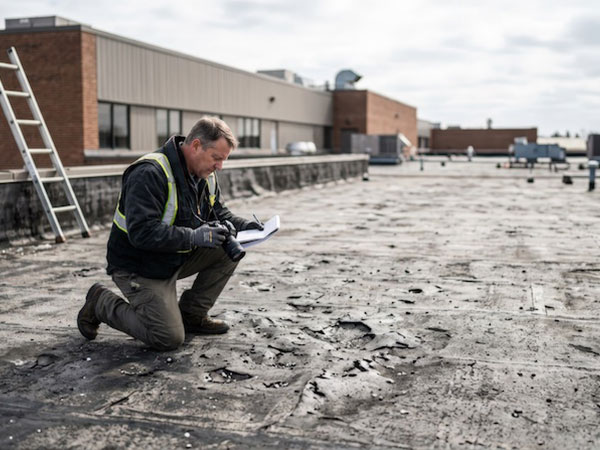
Glendale commercial roofs move through a dry, hot summer and a concentrated rainy season, making inspection timing especially useful for building owners. Heat, ultraviolet exposure, wind, and seasonal rainfall can affect membranes, seams, flashing, drainage points, and other roof details. Roof inspection before major seasonal changes can identify visible and hidden problems while there is still time to address them.
Call Shark Commercial Roofing Systems at (213) 466-0074 for roof inspection in Glendale, CA.
Roof Inspection Before Glendale’s Rainy Season
Late fall is one of the most valuable times to inspect a commercial roof because it provides an opportunity to address deficiencies before sustained rainfall begins. The inspection should examine the entire roof surface, not only areas where a leak has already appeared inside the building.
Inspectors look at membrane condition, field seams, flashing around walls and curbs, penetrations, drains, and low areas where water may collect. They also look for loose materials, damaged surfaces, deteriorated sealants, and conditions that could allow water beneath the roofing system.
Preparing Commercial Roofs for Seasonal Rain
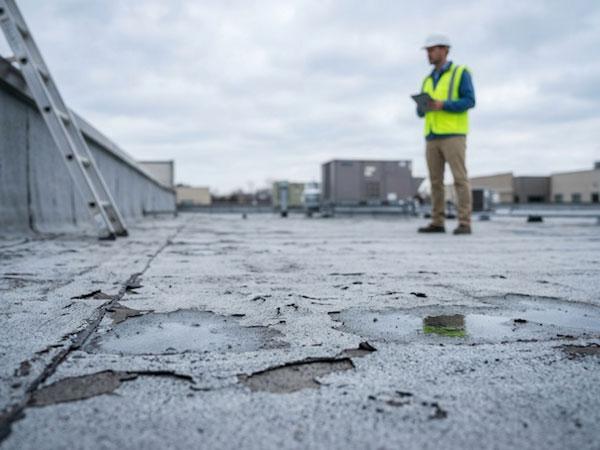
A pre-rain inspection can identify drainage problems before heavy precipitation puts them under pressure. Blocked drains, clogged strainers, and debris around low points can slow water removal and increase the amount of time moisture remains on the roof.
The inspection also provides a chance to document developing defects and prioritize repairs. A small seam issue or deteriorated flashing detail can often be addressed as planned maintenance, while delaying the same problem until a storm produces an active leak can create a more disruptive response.
Roof Inspection After Summer Heat and UV Exposure
Glendale’s long dry season can place repeated stress on commercial roofing materials. Strong ultraviolet exposure and high temperatures can contribute to surface aging, drying or cracking of exposed materials, and movement at seams and flashing transitions.
A post-summer inspection helps identify this accumulated wear before the rainy season exposes weak points to sustained moisture. Reviewing the roof after the hottest part of the year can also help property managers decide which repairs should be completed before winter and which conditions can be monitored.
Infrared Drone Scanning for Hidden Roof Problems
A standard walkthrough can identify many visible defects, but some moisture and membrane problems are concealed below the surface. Infrared scanning uses differences in heat patterns to help locate areas that may contain trapped moisture or other abnormalities that are difficult to identify by sight alone.
Drone-based scanning can cover large commercial roof areas efficiently while providing detailed visual and infrared information. This can help inspectors investigate broad sections of a roof without relying solely on isolated interior stains or visible surface damage. Findings from scanning can then guide closer evaluation of suspect areas.
Roof Inspection for Seasonal Planning
Scheduling inspections around Glendale’s weather cycle gives building owners a clearer picture of roof condition before seasonal risks increase. A late-fall inspection can focus on rain readiness, while a post-summer review can identify heat and UV damage that may otherwise remain unnoticed.
Using both timing and advanced scanning methods can help property managers identify problems earlier and organize repairs around building operations.
For roof inspection in Glendale, CA contact Shark Commercial Roofing Systems at (213) 466-0074 today.
FAQ
When is the best time of year to schedule a roof inspection in the Glendale area?
Late fall is generally the most useful time for a pre-rain inspection because it allows deficiencies to be identified before the wetter season. A post-summer inspection is also valuable for finding heat and UV-related deterioration.
What does a pre-rainy-season roof inspection look for specifically?
The inspection focuses on membrane condition, seams, flashing, penetrations, drains, low areas, sealants, and debris or drainage obstructions. The goal is to identify conditions that could allow water intrusion or interfere with drainage during seasonal rainfall.
How does infrared drone scanning improve what a roof inspection can detect compared to a standard walkthrough?
Infrared drone scanning can help identify abnormal heat patterns associated with trapped moisture or concealed deterioration over large roof areas. It supplements the visual inspection by showing conditions that may not be obvious from the surface.