

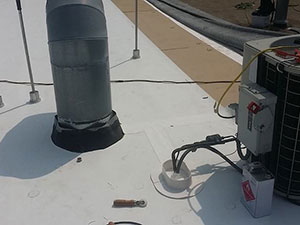
Shark Commercial Roofing Systems provides commercial roof repair services for business properties in Van Nuys, CA. When a roof shows signs of trouble, the first step is not guessing at the cause. It is documenting what can be observed safely and having the roof assessed so the repair scope matches the actual problem. Call (213) 466-0074 to discuss a commercial roof concern.
Commercial Roof Repair Warning Signs
Some roof problems are visible from inside the building or from other safe locations. Water stains, active dripping, recurring moisture around the same interior area, or changes near roof edges and penetrations are all reasons to arrange a commercial roof inspection. Building staff should document what they see without attempting unfamiliar roof access or trying to diagnose the roof from the ground.
Signs that usually deserve prompt assessment: active leaks, new interior water intrusion, recurring ponding that remains after weather clears, visibly loose or deteriorated flashing, displaced roofing materials, or a previously repaired area that is leaking again. These conditions can indicate that water is entering the roof assembly or that a detail is no longer performing as intended.
Signs that may be documented for routine follow-up when they are stable and not leaking: isolated surface wear, small blisters, minor cracking, or weathered sealant observed from a safe location. These findings still matter. If they spread, change quickly, occur with moisture, or affect a critical area of the building, they should be evaluated sooner rather than simply waiting for the next planned visit.
None of these observations identifies the cause by itself. A ceiling stain may be separated from the actual roof opening because water can travel through insulation, deck components, or other parts of the assembly before it becomes visible indoors. Ponding can involve drainage, slope, settlement, blockage, or other building-specific conditions. The purpose of the assessment is to connect the visible symptom with evidence from the roof.
Energy Bills Are Not a Roof Diagnosis
A change in heating or cooling costs should not be treated as proof that the roof is failing. Energy use can change because of HVAC condition, occupancy, operating schedules, weather, utility rates, insulation, air leakage, and other factors. If higher energy costs appear at the same time as leaks, moisture, or other roof concerns, the information can be shared with the contractor, but the bill alone does not establish a roofing defect.
If energy performance is part of the concern, ask what roof conditions can actually be observed and what would require additional building-envelope or mechanical evaluation. Keeping those questions separate prevents an ordinary repair visit from turning into an unsupported diagnosis of the entire building.
Preventive Steps for a Commercial Roof
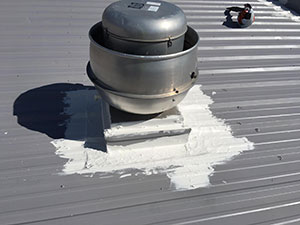
Preventive care works best when it follows the roof system and the building’s actual conditions. A commercial roof maintenance plan may include reviewing drainage areas, seams, flashing, penetrations, rooftop equipment areas, previous repairs, and other system-specific details. Debris or blocked drainage should be addressed through an appropriate maintenance scope rather than assuming standing water will resolve on its own.
There is no single inspection interval that fits every commercial roof. The appropriate schedule can depend on the roof system, age, condition, drainage, rooftop traffic, repair history, exposure, surrounding debris, and any written warranty or maintenance requirements. Additional assessment may also be appropriate after severe weather or whenever a new leak, visible damage, or drainage change appears.
Maintenance records can make later repair decisions more useful. Note when a condition was first observed, whether it has changed, what work was completed, and whether the same area has required repeated attention. That history can help distinguish a contained defect from a recurring pattern that needs broader investigation.
What a Commercial Roof Assessment Should Clarify
A useful assessment should identify the roof system, the location and extent of the visible problem, surrounding conditions, drainage, flashing and penetrations, previous repairs, and any signs that moisture may extend beyond the most obvious defect. Not every visit includes destructive testing or moisture scanning, so property owners should ask what was actually evaluated and what remains uncertain.
The resulting repair recommendation should explain the affected area, proposed method or materials, preparation, major exclusions, and any conditions that could expand the scope. If the evidence shows that a problem is broader than a localized repair, the contractor should explain why additional repair, restoration, or replacement is being considered rather than treating one symptom as automatic proof of a larger failure.
Commercial Roof Repair in Van Nuys, CA
Shark Commercial Roofing Systems serves Van Nuys commercial properties with roofing repair and related services. Its broader commercial roofing service includes repair and maintenance support for commercial buildings. For a roof concern in Van Nuys, start with what can be observed safely, have the cause assessed, and use the documented findings to decide what work is actually needed.
Contact Shark Commercial Roofing Systems at (213) 466-0074 to discuss commercial roof repair in Van Nuys, CA.
Frequently Asked Questions
Does every roof warning sign require emergency repair?
No. Active leaks, new interior water intrusion, worsening damage, or recurring ponding deserve prompt assessment, while stable minor wear may be documented for routine follow-up unless conditions change.
Can a ceiling stain show exactly where the roof is leaking?
Not reliably. Water can travel through a roof assembly before appearing indoors, so the visible stain is a starting point for investigation rather than a confirmed leak location.
Does a higher energy bill mean the roof is failing?
No. Energy costs have many possible causes, so a bill increase by itself is not enough to diagnose a roofing problem.
How often should a commercial roof be inspected?
The schedule should reflect the roof system, condition, drainage, repair history, exposure, rooftop activity, and any written warranty or maintenance requirements.