

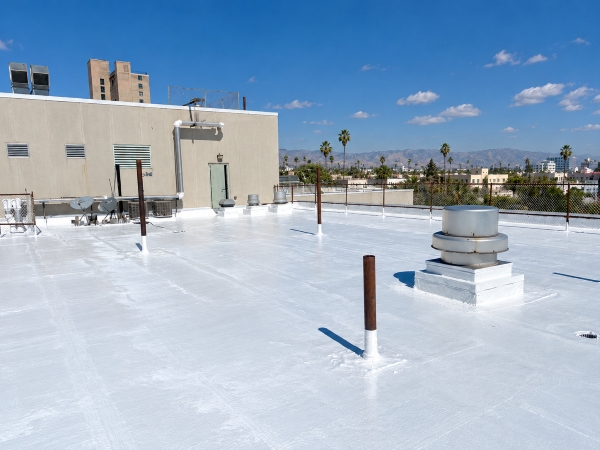
Silicone roof coating in Pomona, CA can be a useful restoration option for a commercial flat or low-slope roof when the existing roof is still a suitable base for coating. Shark Commercial Roofing Systems provides silicone coating services for commercial properties, but the decision should follow the roof’s moisture condition, adhesion, repairs, drainage, substrate, and compatibility requirements.
The first question is not whether silicone is broadly durable or reflective. It is whether the roof underneath can support a coating system without hiding wet insulation, unstable materials, failed flashing, or drainage conditions that need separate correction. A coating is a restoration layer, not a substitute for unresolved roof defects.
What a Silicone Roof Coating Does
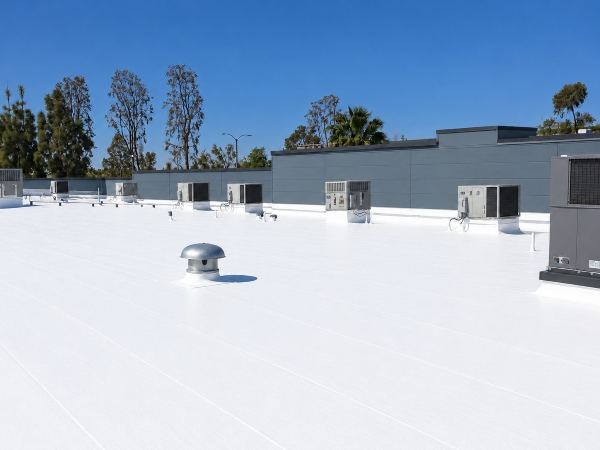
Silicone roof coating is a liquid-applied layer that cures into a continuous protective surface over an existing roof. It is applied in coats with a roller or sprayer, over a prepared roof, subject to the condition of the existing assembly. Because it forms a continuous surface, it can reduce exposed joints within the coated field, and it is usually a white or reflective finish that reflects part of the sun’s heat.
Pomona sits inland, where summer sun and heat are intense, so UV resistance and a reflective surface are reasons many owners consider silicone. Any effect on cooling costs depends on the building, its insulation and how the space is used, so it is a possible benefit and not a guaranteed saving. Silicone may be considered for some roofs that experience recurring standing water, but ponding does not make a roof a coating candidate by itself. Poor slope, blocked drains, low areas, or other drainage defects still need separate evaluation.
Is Your Pomona Roof a Good Candidate?
Age alone does not decide it. A coating restores and protects a roof that is still fundamentally sound, and the condition of the existing surface decides what has to happen first:
| Roof Condition | Good Candidate for Coating | Needs Repair or Replacement First |
|---|---|---|
| Moisture | No confirmed widespread wet insulation or trapped moisture in the areas evaluated | Wet insulation or trapped moisture found beneath the roofing material |
| Adhesion | Existing surface is well bonded and the prepared surface is stable and compatible with the selected silicone system | Lifting, blistering or poor bonding across multiple areas |
| Surface and Substrate | Decking is sound and the roofing material is largely intact | Deteriorated decking or widespread material breakdown |
| Seams and Flashing | Isolated defects that can be repaired before coating | Failure repeated along many seams or across much of the perimeter |
| Drainage | Observed drainage conditions are acceptable for the selected system after any required corrections | Blocked drains, low areas, slope issues, or recurring ponding that require separate drainage work |
| Compatibility | The coating is compatible with the existing roofing and any earlier coating | An earlier product or coating history that silicone will not bond to |
A silicone coating does not repair rotten decking, dry out saturated insulation or correct a drainage defect. Those problems are resolved on their own terms, through repair, a drainage correction or, in some cases, replacement, before coating makes sense.
Why Inspection Comes First
Many of the factors above cannot be judged from the ground. Moisture trapped beneath the surface may show up only as a slightly different temperature or a soft spot, and adhesion can only be confirmed by testing the coating on the actual roof. A careful inspection documents what is found so the scope reflects the roof as it is. Depending on the condition, moisture investigation may include scans, test cuts, or other diagnostic methods, and no single screening method should be treated as automatic proof of the exact extent of wet materials. Whether the answer turns out to be coating, repair or something else, it should be based on those findings and not on a standard package.
The Silicone Coating Process
Preparation and Repairs. The roof is cleaned, and isolated problems such as a failed seam or damaged flashing are repaired first. Coating over an unaddressed defect seals the problem in instead of solving it.
Application. Coverage rate, finished thickness, number of passes, weather limits, and cure time should follow the selected product specification. There is no universal rule that every silicone roof requires the same number of coats or the same cure interval.
Application Acceptance. After application, the coverage is checked for full, even coating and for thin or missed areas, and for signs the coating has not bonded properly.
Follow-Up Inspection. A coated roof still needs condition reviews and maintenance and inspection, with timing based on drainage, rooftop traffic, exposure, prior repairs, equipment work, and any written maintenance requirements that apply.
Plan Your Pomona Silicone Coating
One tradeoff is worth knowing before you start: once silicone has cured, future work has to account for compatibility with that surface. Another coating may require specific cleaning, preparation, testing, primer, or another compatible restoration method. That is why compatibility testing matters before the first coat goes on.
If your commercial building is in Pomona, CA, Shark Commercial Roofing Systems can assess the roof, explain what we find and recommend coating, repair or another approach. For a nearby example of how we evaluate coating candidates, see our guide to silicone roof coating in City of Industry. Contact us at (213) 466-0074 to schedule an inspection.
Frequently Asked Questions
Can any commercial roof in Pomona be coated with silicone?
No. A coating works best on a roof that is structurally sound, dry and free of significant material damage, and the existing surface must be compatible with silicone. If those conditions are not met, they generally need to be addressed first.
Will silicone coating stop ponding water on my roof?
No. Silicone may be suitable for some roofs that experience standing water, but blocked drains, low areas, slope problems, or other drainage defects still need separate evaluation.
How do I know whether my roof needs repairs before coating?
An inspection checks for trapped moisture, adhesion, seam and flashing condition, and drainage. Defects found during that inspection are repaired before any coating is applied.
Can I switch to a different coating later?
Future coating work must account for compatibility with the cured silicone surface. The next system may require specific cleaning, preparation, testing, primer, or another compatible restoration method.